



The Orionids peak overnight 21 to 22 October. The bright gibbous Moon sets at around 3am, so the sharpest window is from then until first light at about quarter to six. See exactly what is above your own location before you head out.
The Leonids peak overnight 16 to 17 November. The Moon, a little under half lit, sets at around 10.15pm and the radiant climbs through the small hours, so the best stretch runs from about 1am until dawn. See exactly what is above your own location before you head out.
The Geminids are at their best over the nights of 13 to 14 and 14 to 15 December, and this is the best-placed shower of the year. The crescent Moon sets in the evening, so the sky is properly dark from about 9pm onwards. See exactly what is above your own location before you head out.
The next meteor shower in the UK is the Orionids, peaking overnight on 21-22 October 2026. After that the calendar barely pauses: the slow, fireball-prone Taurids through early and mid November, the Leonids on 16-17 November, and the Geminids, the richest shower of the whole year, on 13-15 December under a Moon that clears out of the way by mid-evening.
This page is the full UK meteor shower calendar for the rest of 2026 and into January 2027: every peak night, what the Moon is doing, the hours actually worth being outside, and a link to our full guide wherever one shower deserves a closer look. Times are given for the UK, and they differ by only a few minutes between London, Manchester, Cardiff and Edinburgh, so the same windows work wherever you are.
When Is the Next Meteor Shower in the UK?
- Next up: the Orionids, overnight 21-22 October 2026, best from about 3am to dawn on the 22nd once the Moon has set.
- Then: the Southern Taurids around 4-5 November and the Northern Taurids around 11-12 November, both under dark skies near the New Moon of 9 November.
- Then: the Leonids, overnight 16-17 November, best from about 1am to dawn.
- The big one: the Geminids, overnight 13-14 and 14-15 December, with up to around 150 meteors an hour under ideal skies.
- To close the year: the Ursids around 22-23 December, then the Quadrantids open 2027 in the early hours of 4 January.
UK Meteor Shower Calendar: The Rest of 2026
Moonlight is the single biggest thing that decides how much of a shower you see, so it is listed alongside every peak below. Every peak spans a night rather than a calendar date, which is why they are written as pairs. The clocks go back on Sunday 25 October, so the Orionid times are BST and everything after that is GMT.
| Shower | Peak night (UK) | Moon on the night | Best hours |
|---|---|---|---|
| Orionids | 21-22 October 2026 | Bright waxing gibbous, about 80% lit, sets around 3am | About 3am to 5.45am (BST) |
| Southern Taurids | Around 4-5 November 2026 (broad maximum) | Thin waning crescent, rises around 2.40am | About 9pm to 2.30am |
| Northern Taurids | Around 11-12 November 2026 | Two or three days past New Moon, sets before the sky is dark | Late evening to the small hours |
| Leonids | 16-17 November 2026 | Just short of first quarter, a little under half lit, sets around 10.15pm | About 1am to 5.25am |
| Geminids | 13-14 and 14-15 December 2026 | Waxing crescent, a fifth to a quarter lit, sets by about 8pm to 9pm | From about 9pm to dawn, richest around 2am |
| Ursids | 22-23 December 2026 | Almost full, up all night | All night, radiant never sets |
| Quadrantids | 3-4 January 2027 | Thin waning crescent, rises only around 5.45am | About 1am to 6am, sharpest around 3.30am |
Moon times are calculated for London; elsewhere in the UK they shift by a few minutes at most. If you want the eclipses, oppositions and full moons alongside these dates, the 2026 UK celestial events calendar lists everything worth marking from British skies specifically.
Orionids: 21-22 October 2026
The Orionids peak overnight on Wednesday 21 to Thursday 22 October 2026. They are debris from comet 1P/Halley, so on an October morning you are watching flecks of the most famous comet of all burn up overhead. They are fast, around 66 kilometres per second, which makes the trails quick and sharp, and the brighter ones often leave a glowing streak that hangs for a second or two.
Expect around 10 to 20 an hour under a genuinely dark sky. The catch in 2026 is the Moon: a bright waxing gibbous, about 80 per cent lit, that stays up until around 3am. That still leaves a clean, moon-free window from moonset until dawn twilight begins at about 5.45am BST, which is also exactly when the radiant above Orion's raised club is at its highest. Set an alarm for 3am rather than sitting up from midnight, and you will see more for less time in the cold.
Our full Orionid meteor shower 2026 guide has the city-by-city moonset and dawn times for London, Manchester and Edinburgh, where to find the radiant, and why a clear night either side of the peak can beat a hazy peak night.
Taurids and Leonids: November 2026
November brings three peaks, and the New Moon of 9 November keeps two of them almost entirely free of moonlight.
The Taurids: Slow Meteors and Fireballs
The Taurids come in two branches, both shed by comet 2P/Encke. The Southern Taurids have a broad maximum around 4-5 November and the Northern Taurids peak around 11-12 November. Neither is rich, at around five meteors an hour each, but the Taurids are famous out of all proportion to their numbers because they are slow, under 30 kilometres per second, and they produce a higher than usual share of fireballs. One bright Taurid drifting across the sky is worth a dozen faint streaks.
On 4-5 November the Moon is a thin waning crescent that does not rise until around 2.40am, and by 11-12 November there is no Moon in the dark sky at all. Taurus is up for most of the night, highest around half past midnight, which makes this an unusually relaxed shower: no alarm needed. Read our full Taurid meteor shower 2026 guide for the two branches, the Moon tables and how to spot the radiant beside the Pleiades.
The Leonids: The Fastest of the Year
The Leonids peak overnight on Monday 16 to Tuesday 17 November 2026. Shed by comet 55P/Tempel-Tuttle, they hit the atmosphere at around 71 kilometres per second, the fastest of any major shower. In a normal year they give around 10 to 15 an hour from a dark site, although the Leonids are known for the rare storms they produced in past centuries.
The timing works well in 2026. The Moon is just short of first quarter, a little under half lit, and sets at around 10.15pm GMT, about when the radiant in Leo rises. So the productive part of the night, after midnight, is moon-free, and the best stretch runs from roughly 1am until dawn twilight at about 5.25am. Our full Leonid meteor shower 2026 guide has the timeline for London, Manchester and Edinburgh.

Make it personal
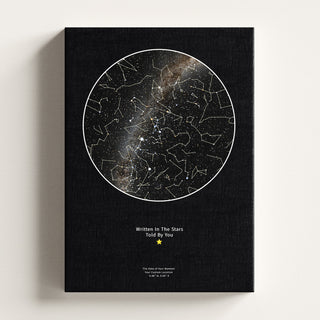
 Personalised Star Map | Custom Night Sky Print
From £21.99
View product →
Personalised Star Map | Custom Night Sky Print
From £21.99
View product →
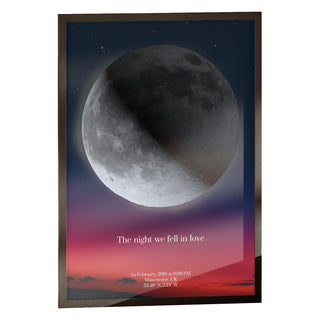
 Personalised Moon Map | by Skylit Studio
From £21.99
View product →
Personalised Moon Map | by Skylit Studio
From £21.99
View product →
 Personalised Moon Phase Map for Family | by Skylit Studio
From £21.99
View product →
Personalised Moon Phase Map for Family | by Skylit Studio
From £21.99
View product →
 Custom Location Map | Personalised Map Print by Skylit Studio
From £21.99
View product →
Custom Location Map | Personalised Map Print by Skylit Studio
From £21.99
View product →
 Your Name From Orbit
From £21.99
View product →
Your Name From Orbit
From £21.99
View product →
 Print Your Universe - Custom Image Print
From £19.79
View product →
Print Your Universe - Custom Image Print
From £19.79
View product →
Geminids: 13-15 December 2026
If you only go out once more this year, make it this one. The Geminids are the richest annual shower there is, capable of around 120 to 150 meteors an hour under ideal dark skies. They are also slow, at around 35 kilometres per second, so the trails are long and lingering, and they often carry a faint yellow or greenish tint.
The predicted maximum in 2026 falls during daylight on 14 December, UK time, which means the nights either side, 13-14 December and 14-15 December, are both well worth trying. Pick whichever is clearer. The Moon is a slim waxing crescent on both nights, a fifth to a quarter lit, setting at about 8pm on the 13th and about 9pm on the 14th, so the whole prime window is moonless.
The other reason the Geminids suit British winters is the radiant. It sits in Gemini, close to the bright star Castor, and rises in the early evening rather than after midnight. That means you can be watching properly from around 9pm, with rates building towards the small hours when the radiant is highest, at about 2am. It is the one major shower of the year that suits a household that cannot stay up until three.
The Geminids are also an oddity. Almost every shower traces back to a comet, but the Geminid stream comes from 3200 Phaethon, a rocky object classed as an asteroid that sheds dust as it swings close to the Sun. It is part of why the meteors are slower and brighter than most.
Dress for it. Mid-December in Britain is cold in a way an autumn night is not, and the difference between a good hour outside and a miserable ten minutes is entirely down to layers, a flask and something to sit on.
If you only go out once more this year, make it a clear December night for the Geminids.
Ursids and the First Shower of 2027
Ursids: 22-23 December 2026
The year signs off with the Ursids, peaking around the longest nights, with the 2026 maximum expected late on 22 December, so the night of 22-23 December is the one to try. The radiant sits in Ursa Minor, close to the Pole Star, which never sets from the UK, so the shower is technically available all night. Rates are around ten an hour, and in 2026 the Moon is almost full and up throughout, so realistically you will catch only the brighter ones. Treat it as a bonus if you are outside anyway rather than a night to plan around.
Quadrantids: 3-4 January 2027
The first shower of 2027 is a strong one. The Quadrantids have a sharp, short-lived peak, predicted for around 3.30am GMT on 4 January 2027, which is close to ideal timing for Britain. At their best they can reach a zenithal hourly rate of around 80, though the peak lasts only a few hours, so timing matters more than for any other shower. The radiant, in the northern part of Boötes, sits low in the north through the evening and climbs high before dawn, and the Moon is a thin waning crescent that does not rise until around 5.45am. If the sky is clear, it is well worth an early alarm.
Earlier in 2026: Perseids and Draconids
The 2026 Perseid meteor shower peaked overnight on 12-13 August, with the richest hours between roughly 1am and first light on the 13th. The Moon was new at 6.37pm BST on the 12th, so the sky was completely dark, as good a Perseid night as the decade offers. That same New Moon also produced a solar eclipse on 12 August, total along a narrow track across Greenland, Iceland and northern Spain and seen from the UK as a deep partial eclipse before sunset. Britain then had a deep partial lunar eclipse on 28 August, which our guide to the blood moon of 2026 covers in detail.
The Perseids are debris from comet 109P/Swift-Tuttle, and they return on the same schedule every year, active from mid July to late August with the peak around 12-13 August. The minor Draconids peaked on 8-9 October, an evening shower of around five to ten meteors an hour under a thin waning crescent. Both are now behind us, which is why the calendar above starts with the Orionids.
Every shower works the same way. Earth passes through a stream of dust left by a comet, and because we meet the stream from a fixed direction, the meteors appear to fan out from a single point in the sky, the radiant, which gives each shower its name. If you are still learning to find those constellations, our guide to the 88 official constellations is a useful place to start, and the way the Moon's phase is worked out for any date is explained on our page about moon phase accuracy and lunar calculations.
How to Watch a Meteor Shower Well
The mechanics are the same for every shower on the calendar, and they matter more than most people expect. Getting these right is the difference between counting twenty meteors and counting three.
Five Things That Actually Make a Difference
- Give your eyes time. Allow 20 to 30 minutes in the dark for full night vision, and keep phone screens dimmed or set to red. One glance at a bright screen resets the clock.
- Look up, not at the radiant. Aim your gaze around 40 to 60 degrees away from the radiant for the longest trails. Meteors near the radiant appear foreshortened.
- Lie back. A reclining chair or a blanket lets you take in the widest sweep of sky without a stiff neck, and you will last far longer.
- Skip the telescope. Every shower here is a naked-eye event. Binoculars and telescopes only narrow your view and cost you meteors.
- Be patient. Meteors come in bursts and lulls, so give it a solid hour before deciding whether a night is any good.
One more thing worth knowing: the hourly rates quoted for any shower are idealised figures, measured with the radiant directly overhead under a perfectly dark sky. From a real British garden, with some horizon obstruction and a bit of streetlight, expect a fraction of the headline number. That is not a disappointment, it is just how the figure is defined.
Where to Watch Across the UK
You can catch meteors from a garden or a city park, and in a strong shower you will still see plenty. But the darker your sky, the more you see, because a genuinely dark site reveals the faint meteors that streetlight glow hides completely. The UK is unusually well served here, with a network of internationally recognised dark-sky sites within reach of most of the country.
Northumberland National Park and Kielder in the north-east of England, Galloway Forest Park in south-west Scotland, Exmoor and the Brecon Beacons (Bannau Brycheiniog) in the south and west, and Snowdonia (Eryri) in north Wales all offer skies dark enough for the Milky Way to show clearly. In Scotland the autumn and winter nights are longer still, which gives you a little more dark time around each peak. Our guide to the UK's best dark-sky locations covers many of them in detail.
Wherever you go, match the horizon to the shower. An open view to the south and east helps for the Orionids and Leonids in their pre-dawn hours, while Gemini and Taurus climb high enough that an open sky overhead matters more than any single direction. Check the local cloud forecast, and let someone know your plans if you are heading somewhere remote in December. For getting your bearings once you are out there, our complete guide to British stargazing covers the constellations on view from UK skies through the year.
Check the Exact Sky at Your Location
Peak times and averages are a starting point, but the sky above you on the night depends on exactly where you stand and when you look up. Rather than guess, you can see it for yourself with our free Night Sky Explorer. Enter your location and the date and time you plan to watch, and it renders the real sky for that moment, so you can find where the radiant sits, watch it climb through the night, and confirm exactly what the Moon is doing while you are out there.
It is genuinely useful planning. You can line up the best window for your own spot, get your bearings before you are standing in the dark, and understand the sky you are about to watch instead of simply staring up and hoping. It is also the same engine that sits behind our prints, so once you have found a view that means something to you, it can become something lasting. To see how that works from sky to finished piece, take a look at how it works.

Free interactive tool
Explore the night sky for any date and place
Our free Night Sky Explorer is a live planetarium in your browser. See the real stars, constellations, planets, Moon and Milky Way exactly as they were, travel through time, and when you find a moment worth keeping, turn it into a print.
Open the Night Sky Explorer →Keep the Night You Watched
A meteor shower is fleeting by nature, which is exactly why a night spent under one is worth holding on to. Whether it is a pre-dawn hour with the Orionids or a December night watching the Geminids with someone who stayed up with you, there are two Skylit Studio prints that suit the occasion.
A personalised star map captures the real night sky exactly as it looked from your chosen place at your chosen moment. Set it to 4am on 22 October at the spot where you watched, or to 2am on 14 December, and the print records the true arrangement of stars overhead on that night. Every map is built from the same astronomical data professional astronomers rely on, which you can read more about on our page detailing the precision behind our star maps.
There is also a fitting companion piece. A personalised moon phase print shows the Moon exactly as it appeared on a chosen date, which for a meteor night is a rather poetic thing to record: the slim or absent Moon is the very reason the meteors showed so freely. Both lines are also offered as gallery-wrapped canvas if you prefer a frameless finish. What makes either print personal is not the astronomy on its own, it is the moment you chose paired with the words you put beneath it.
Good to Know Before You Order
- Sizes and finishes: both prints come in A4, 30 x 40 cm, 40 x 50 cm, 50 x 70 cm and 60 x 80 cm as unframed or framed prints, with gallery-wrapped canvas offered up to 50 x 70 cm.
- Prices: prints start at £21.99, with framed and canvas options at fixed prices by size.
- Packaging: unframed A4 ships flat in a rigid mailer, larger unframed sizes are rolled in a sturdy tube, framed prints are wrapped and boxed, and canvases arrive boxed and ready to hang.
- Dispatch: orders placed by 3PM on a working day (Mon-Fri) are dispatched the same day, then sent free on Royal Mail Tracked 48, arriving in 2 to 4 working days. Canvas may need one extra working day for stretching and finishing.
Whichever you choose, the idea is the same: a night that lasted a few hours becomes something you can hang on the wall and return to for years. Written In The Stars. Told By You.
Create Your Meteor Night Star Map
Frequently Asked Questions
When is the next meteor shower in the UK?
The Orionids, peaking overnight on 21-22 October 2026. They give around 10 to 20 meteors an hour under a dark sky, and the best time is from about 3am, when the gibbous Moon sets, until dawn twilight at about 5.45am BST. After that come the Taurids in early and mid November, the Leonids on 16-17 November and the Geminids on 13-15 December.
What time should I look for a meteor shower tonight in the UK?
For most showers the best hours are after midnight and before dawn, when your side of the Earth faces into the stream and the radiant is highest. The Geminids are the main exception, worth watching from about 9pm. Always check when the Moon sets on the night, because the darkest hours after moonset usually give the best count.
Which is the best meteor shower still to come in 2026?
The Geminids, at their best over the nights of 13-14 and 14-15 December 2026. They are the richest annual shower, at around 120 to 150 meteors an hour under ideal dark skies, and the Moon is a slim crescent that sets by about 9pm on both nights. The radiant also rises in the early evening, so you do not have to wait until the small hours to start watching.
What moon phase falls on each remaining 2026 meteor shower peak?
The Orionids on 21-22 October have a waxing gibbous, about 80 per cent lit, that sets around 3am. The Southern Taurids around 4-5 November have a thin waning crescent that rises around 2.40am, and the Northern Taurids around 11-12 November fall just after the New Moon of 9 November. The Leonids on 16-17 November have a Moon just short of first quarter setting around 10.15pm. The Geminids on 13-15 December have a crescent that sets in the evening, and the Ursids on 22-23 December fall under an almost full Moon.
Did I miss the Perseids in 2026?
Yes, the 2026 Perseid peak fell overnight on 12-13 August under a New Moon. The Perseids return every year on the same schedule, peaking around 12-13 August. In the meantime the Orionids, Taurids, Leonids and Geminids are all still to come in 2026, and the Geminids are richer than the Perseids.
Can I see meteor showers from Scotland?
Yes. Every shower on this calendar is visible across the whole of the UK, and peak times differ by only a few minutes between southern England and Scotland. Scotland's longer autumn and winter nights and its dark-sky sites, such as Galloway Forest Park, make it one of the best places in Britain to watch.
Do I need a telescope or binoculars to watch a meteor shower?
No. Every shower on this calendar is a naked-eye event, and optical aids only narrow your field of view and cost you meteors. Find a dark, open spot, let your eyes adjust for 20 to 30 minutes, lie back so you can take in as much sky as possible, and give it a full hour.
Why do the quoted hourly rates seem higher than what I actually see?
The headline figure for any shower is an idealised rate, measured with the radiant directly overhead under a perfectly dark sky with a clear horizon. Real conditions in the UK, with some light pollution and obstructed horizons, will give you a fraction of that. It is still worth going out, and a dark-sky site makes a striking difference to the count.
Where do meteor showers come from?
Most are trails of dust shed by comets. The Orionids come from comet 1P/Halley, the Taurids from 2P/Encke, the Leonids from 55P/Tempel-Tuttle and the Perseids from 109P/Swift-Tuttle. The Geminids are the exception, tracing back to 3200 Phaethon, a rocky object classed as an asteroid, which is part of why Geminid meteors are slower and brighter than most.
How can I check the sky above my own location on a peak night?
You can use our free Night Sky Explorer. Enter your location and the date and time you plan to watch, and it renders the real sky for that moment, so you can see where the radiant sits, track how high it climbs and confirm how dark the sky will be.
Meteor showers come round on the same annual schedule, which means there is always a next one. Pick a date from the calendar above, check the sky for your own spot, wrap up warmly if it is a winter peak, and give yourself a full hour outside. December is the one to circle.


