



The Christmas lights are still up, the year is three days old, and one of the strongest meteor showers of the year arrives while most people are asleep. The Quadrantid meteor shower is the first big shower of every year, and in 2027 it lines up unusually well for the UK.
Below: the 2027 peak, the Moon conditions we calculated for London, Manchester and Edinburgh, where to look, and how to catch a short, sharp shower that rewards good timing more than any other.
The Short Answer
Quadrantids 2027 at a glance
Peak night: Sunday 3 to Monday 4 January 2027.
Predicted maximum: the early hours of Monday 4 January, GMT.
Active: roughly 28 December to 12 January, but strong for only a few hours.
Moon: a thin waning crescent, about 12 per cent lit, not rising until around dawn.
Best time from the UK: about 02:00 GMT until dawn twilight, around 06:00.
Where to look: north-east, climbing high in the east before dawn.
Parent body: asteroid 2003 EH1, thought to be a burnt-out comet.
What Are the Quadrantids?
Each January the Earth ploughs through a stream of grains, most no bigger than sand, which burn up roughly 100 kilometres overhead. What makes the Quadrantids unusual is their source. Most showers come from comets. The Quadrantids are linked to 2003 EH1, an object catalogued as an asteroid that many astronomers think is the dead core of a comet that has lost most of its ice. The meteors arrive at a medium speed of around 41 kilometres per second, and the shower has a reputation for occasional bright fireballs.
A shower named after a lost constellation
The name is a piece of astronomical history. The meteors appear to stream from a point in the sky that 18th-century astronomers called Quadrans Muralis, the Mural Quadrant, a constellation named after an instrument used to measure star positions. It was dropped when the International Astronomical Union fixed the modern list of 88 constellations in 1922, but the shower kept the name. Today the radiant sits in northern Boötes, close to the border with Draco and not far from the end of the Plough's handle.
When Do the Quadrantids Peak in 2027?
The Quadrantid meteor shower 2027 is expected to reach maximum in the early hours of Monday 4 January, which makes the night of Sunday 3 to Monday 4 January the one to plan around. This time the peak falls during UK darkness, rather than in daylight or the evening as it often does.

Timing matters more for this shower than for any other major one. The Perseids and Geminids build up over several nights, but the Quadrantids' best activity is squeezed into a window of roughly six hours. Catch the peak and rates can be impressive. Miss it by half a day and you may see only a handful. Treat any predicted time as a forecast, not an appointment: the maximum can arrive a few hours either side.
Unlike the Perseid meteor shower or the Leonids in November, there is no warm-up week. One part of one night carries the whole show.
The Moon on Peak Night
Moonlight washes out the fainter meteors, so we worked it out. Last quarter falls on 30 December 2026 and new Moon on 7 January 2027, which leaves a thin waning crescent for the peak. At 04:00 GMT on Monday 4 January it is only about 12 per cent illuminated.
Better still, it stays below the horizon for almost all of the useful hours. The crescent rises at about 05:45 GMT in London, 06:05 in Manchester and 06:30 in Edinburgh, when dawn twilight is already starting. A sliver that low and that late does almost nothing to the sky.
A dark sky, a radiant climbing high and a peak timed for the small hours. 2027 is a year to set the alarm.
That is a real change from 2026, when the Quadrantid peak arrived on the same day as a full Moon and most meteors were lost in the glare. For the rest of the year's highlights, our astronomical events calendar is a good starting point.
Best Time to Watch From the UK
The best time to watch the Quadrantids from the UK is from about 02:00 GMT until dawn twilight begins on the morning of Monday 4 January. Astronomical darkness ends at about 06:00 in London, 06:15 in Manchester and 06:20 in Edinburgh, and the sky stays usefully dark for a little while after that.
The radiant never sets from UK latitudes, but in the evening it hangs low over the northern horizon, only around 10 to 15 degrees up at 21:00. Low radiants mean few meteors, because many of them are skimming the far side of the atmosphere. By 02:00 it has climbed to about 33 degrees, by 04:00 to roughly 49 degrees, and by 06:00 it is around 65 degrees up in the east. With the predicted peak landing in that same pre-dawn stretch, the geometry and the timing work together.
If cloud spoils Sunday night, the nights either side are worth a look, but expect far fewer meteors. The Quadrantids fall away quickly once the peak has passed.
Where to Look: the Radiant Near Boötes
Start by finding the Plough, which by the early hours of a January morning has climbed high into the north-east. Follow the curve of its handle away from the bowl: the radiant lies a short way beyond the end of the handle, between Boötes and the long winding shape of Draco. Bright orange Arcturus, the brightest star in Boötes, rises in the east around midnight and helps you get your bearings.
You do not need to stare at the radiant. Meteors can appear anywhere in the sky, and those well away from it tend to leave longer trails. Face roughly north-east or east, look about halfway up, and let your eyes take in as wide a patch of sky as you can. If you want to rehearse beforehand, our interactive night sky explorer lets you set the date and time and see exactly where Boötes and Draco will be from your own town.
How to Watch on a January Night
You need no equipment, as binoculars would only narrow your view. You do need patience, darkness and warm clothing, because a clear January night can drop well below freezing.
- Get away from lights. The darker the sky, the more meteors you will see. Dark sky areas such as Galloway Forest Park, Northumberland, Exmoor, Bannau Brycheiniog and Eryri are excellent, but a garden with the house lights switched off beats a lit street.
- Give your eyes 20 to 30 minutes. Dark adaptation takes time, and one glance at a phone screen resets it. Use a red torch if you need light.
- Lie back. A reclining garden chair or a camping mat lets you take in the whole sky without a stiff neck.
- Dress for longer than you think. Hat, gloves, several layers, a blanket and a flask of something hot. Cold cuts most meteor sessions short.
- Watch for at least an hour. Meteors come in bursts and lulls. Ten minutes of nothing is normal.
- Check the forecast on the day. January cloud is the biggest risk. A gap in the cloud near the peak is worth more than a clear sky the next evening.
If you watched the Orionids in October, the routine is the same. Only the cold, and the hour, are tougher.
What to Expect
At its best the Quadrantid shower has a zenithal hourly rate of around 80 to 120. That figure assumes a perfectly dark sky with the radiant directly overhead, so it is a theoretical ceiling rather than a promise. From a dark UK site with the radiant 40 to 50 degrees up, a realistic hope is a few dozen meteors an hour if the peak arrives on time, fewer from a town or if the maximum drifts into daylight.

Quadrantids are often described as bluish, and the shower produces its share of fireballs, meteors brighter than any planet that can leave a glowing train for a second or two.
Make it personal
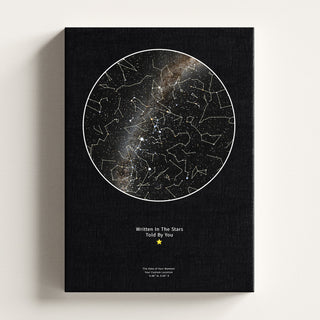
 Personalised Star Map | Custom Night Sky Print
From £21.99
View product →
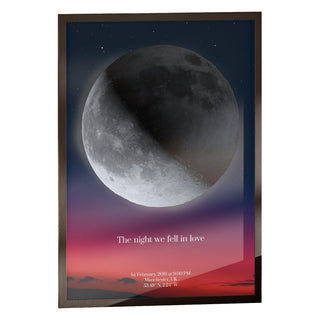
 Personalised Moon Map | by Skylit Studio
From £21.99
View product →
 Personalised Moon Phase Map for Family | by Skylit Studio
From £21.99
View product →
 Custom Location Map | Personalised Map Print by Skylit Studio
From £21.99
View product →
 Your Name From Orbit
From £21.99
View product →
 Print Your Universe - Custom Image Print
From £19.79
View product →
Keeping the Night
The first clear night of a new year, a quiet house, and someone willing to get up at 3am to watch meteors with you: it is a small moment that tends to stick.

A personalised star map from Skylit Studio is one way to keep it. You choose the place, the date and the time, say your back garden at 04:00 on 4 January 2027, and we calculate the stars above that spot at that moment. The meteors themselves are too brief to chart, but the sky they fell through is all there: the Plough high in the north-east, Boötes climbing, the stars you were looking at when the best one went over.
What makes it yours is the moment you choose and the words you add. A short line, a private joke or a few words about the night print alongside the chart. The positions are worked out from real astronomical data, and the science behind our star maps explains how we get the sky right for any date and place.
It also makes a thoughtful gift for anyone who loves the night sky. You can see how it works from design to delivery, choose one of our premium frames or a canvas print, and add gift wrapping with a personal message if it is going to someone else. Design your star map for the night of the Quadrantids, or for any night that matters to you.
Frequently Asked Questions
When is the Quadrantid meteor shower in 2027?
The Quadrantids are active from roughly 28 December to 12 January, with the peak predicted for the early hours of Monday 4 January 2027. In the UK, the night of Sunday 3 to Monday 4 January is the one to watch, ideally from about 02:00 GMT until dawn twilight.
Can you see the Quadrantids from the UK?
Yes. The UK is well placed because the radiant, in northern Boötes near Draco, never sets at British latitudes. It is low in the evening but climbs high in the east before dawn, which is when the Quadrantids are at their best.
Which direction should I look?
Face north-east or east and look about halfway up the sky. The meteors appear to come from near the end of the Plough's handle, but they can streak across any part of the sky, so take in as wide a view as you can.
Will the Moon spoil the Quadrantids in 2027?
No. On the peak morning the Moon is a thin waning crescent, about 12 per cent lit, and it does not rise until roughly 05:45 GMT in London and later further north. The best hours are effectively Moon-free.
Is this the best meteor shower to watch in January?
The Quadrantids are the only major meteor shower in January, and one of the strongest of the year at their peak. Their short peak makes them less forgiving than the Perseids or Geminids, which is why good timing and a clear forecast matter so much.
Can I get a star map of the night of the Quadrantids?
Yes. Enter the date, time and location in the Skylit Studio star map designer and it calculates the sky above that place at that moment. Prices run from £21.99 for an unframed A4 print to £119.98 for a framed 60 x 80 cm print, with free tracked UK delivery and same-day dispatch on orders placed by 3pm on working days.
Before Dawn, Look North-East
Set an alarm for the small hours of Monday 4 January, wrap up warmly and give the Quadrantids an hour of your time. With a dark Moon and a well-timed peak, 2027 offers UK observers a genuinely good chance to see the first meteor shower of the year at its best. Clear skies.


