



Every November the Earth runs into the dusty trail of a comet that swings past the Sun once every 33 years. The grains strike our atmosphere faster than almost any other meteors, and the Leonid meteor shower 2026 peaks over the UK on the night of Tuesday 17 to Wednesday 18 November.
Below are the Moon conditions we calculated for London, Manchester and Edinburgh, when the radiant rises, where to look and how many meteors to expect. The headline for 2026 is good news: the Moon sets before midnight, leaving the best hours dark.
The Short Answer
Leonids 2026 at a glance
Peak night: Tuesday 17 to Wednesday 18 November 2026.
Active: roughly 6 to 30 November.
Moon: first quarter, about half lit, setting at around 23:30 GMT.
Best time from the UK: about 01:00 to 05:30 GMT on Wednesday 18 November.
Where to look: east to south-east, then south, about halfway up the sky.
Rates: around 10 to 15 meteors an hour at a dark site.
Parent comet: 55P/Tempel-Tuttle.
What Are the Leonids?
The Leonids are debris from Comet 55P/Tempel-Tuttle. Each time the comet passes the Sun, roughly every 33 years, it sheds a fresh trail of dust along its orbit. In mid-November the Earth crosses that orbit, and the grains burn up about 100 kilometres above our heads.
The shower is named after Leo, where the meteors appear to come from. Most Leonids are no bigger than a grain of sand, but they meet the Earth almost head-on at around 71 kilometres per second, roughly 255,000 km/h. That makes the Leonids the fastest of the major annual showers.
The famous meteor storms
When the Earth passes through a young, dense trail laid down on a recent pass of the comet, Leonid rates can leap from a handful an hour to thousands. That happened in 1833, when a storm over North America helped launch the modern study of meteors, and again in 1966. The most recent storm-level displays came between 1999 and 2002.
Storms cluster around the comet's returns. Tempel-Tuttle last passed the Sun in 1998 and is not due back until the early 2030s, so 2026 is a normal year. Expect a pleasant, steady shower. Do not expect a storm.
When Do the Leonids Peak in 2026?
The Leonids are active from about 6 to 30 November, with the maximum predicted for 17 November 2026. For UK observers that makes the night of Tuesday 17 to Wednesday 18 November the one to aim for.
A word of honesty: shower timings are predictions, not appointments. The peak can arrive a few hours or even a day away from the forecast, and rates vary from year to year. The Leonids build and fade over several nights, so treat 16 to 19 November as your window and take whichever night is clear.
For the rest of the year's showers, eclipses and planet highlights, see our 2026 astronomical events calendar.
The Moon on Peak Night
Moonlight decides how many fainter meteors you will see, so we calculated it. The Moon reaches first quarter at 11:47 GMT on Tuesday 17 November 2026. On peak evening it is a half-lit waxing Moon, about 52 per cent illuminated at sunset.
It sits in the south as darkness falls, slides into the south-west, and sets at about 23:30 GMT in London, 23:34 in Manchester and 23:32 in Edinburgh.
The Moon leaves before midnight. Leo climbs after it. That is your night.
That timing is close to ideal. The Leonid radiant only rises at around 22:15 GMT, so the shower is weak in the evening while the Moon is up. By the time Leo is high enough to matter, the Moon has gone, and the rest of the night is fully dark. The night before, 16 to 17 November, is even better for moonlight: the Moon is about 42 per cent lit and sets at around 22:15 GMT.
Best Time to Watch the Leonids
The best time to watch the Leonid meteor shower 2026 from the UK is from about 01:00 GMT until dawn twilight begins, on the morning of Wednesday 18 November. The clocks went back on 25 October, so every time in this guide is GMT. Our guide to the clocks going back in 2026 explains the change.
| City | Radiant rises | Moon sets | Dark sky ends |
|---|---|---|---|
| London | 22:16 (17 Nov) | 23:30 (17 Nov) | 05:25 (18 Nov) |
| Manchester | 22:14 (17 Nov) | 23:34 (17 Nov) | 05:35 (18 Nov) |
| Edinburgh | 22:03 (17 Nov) | 23:32 (17 Nov) | 05:42 (18 Nov) |
"Dark sky ends" is the start of astronomical twilight. The radiant climbs steadily through the night. In London it is about 23 degrees up at 01:00, 41 degrees at 03:00 and 56 degrees by 05:00, when it sits in the south-east. The higher the radiant, the more meteors you see.
After midnight you are on the leading side of the Earth as it moves along its orbit, so you meet the meteors head-on. Our explainer on when it gets dark in the UK and how twilight works covers twilight in more detail.
Where to Look: the Radiant in Leo
The Leonid radiant, the point the meteors appear to stream from, lies in the Sickle of Leo. The Sickle is a curve of stars shaped like a backwards question mark, marking the lion's head and mane. Its brightest star, Regulus, sits at the bottom of the curve, about ten degrees below the radiant. Ten degrees is roughly the width of your fist held at arm's length.

In 2026 Leo has two unmissable guides. On the morning of 18 November, Jupiter and Mars sit close together in Leo, less than a degree and a half apart, and only about nine degrees from the radiant. Jupiter is by far the brightest point in that part of the sky. Find the brilliant planet with its fainter reddish companion, and you have found the Leonid radiant.
Leonids can appear anywhere in the sky; they simply trace back to Leo. Meteors near the radiant look short. The long, dramatic ones appear 40 to 90 degrees away. Face east to south-east in the small hours, turning towards the south as dawn approaches, lie back, and rest your gaze about halfway up.
To see exactly where Leo will be from your town, open the free Night Sky Explorer, set your location, choose 18 November 2026 at 03:00 and look east. Our guide to the constellations in the UK sky helps you learn Leo's shape beforehand.
Make it personal
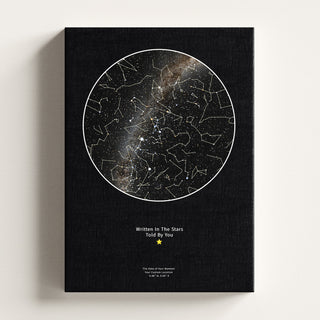
 Personalised Star Map | Custom Night Sky Print
From £21.99
View product →
Personalised Star Map | Custom Night Sky Print
From £21.99
View product →
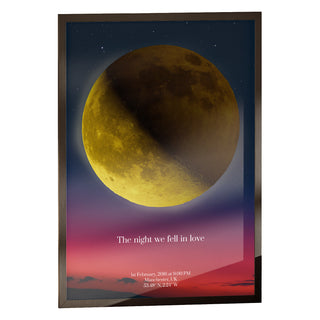
 Personalised Moon Map | by Skylit Studio
From £21.99
View product →
Personalised Moon Map | by Skylit Studio
From £21.99
View product →
 Personalised Moon Phase Map for Family | by Skylit Studio
From £21.99
View product →
Personalised Moon Phase Map for Family | by Skylit Studio
From £21.99
View product →
 Custom Location Map | Personalised Map Print by Skylit Studio
From £21.99
View product →
Custom Location Map | Personalised Map Print by Skylit Studio
From £21.99
View product →
 Your Name From Orbit
From £21.99
View product →
Your Name From Orbit
From £21.99
View product →
 Print Your Universe - Custom Image Print
From £19.79
View product →
Print Your Universe - Custom Image Print
From £19.79
View product →
How to Watch From the UK
Find the darkest sky you can
The Leonids are a naked-eye event, so leave the telescope and binoculars at home. Darkness matters most: a back garden with the lights off works, and a rural spot away from streetlights works better. Our round-up of stargazing spots in the UK has ideas if you fancy a trip.
Give your eyes 20 minutes
Allow at least 20 minutes for your eyes to adapt to the dark. Keep your phone off or dimmed right down. One glance at a bright screen and the clock starts again.
Get comfortable and warm
A reclining chair or camping mat lets you take in a wide sweep of sky. It can be close to freezing at 03:00 in mid-November, so bring a blanket, a hat, gloves and a hot drink.
Watch the forecast, not the calendar
British weather decides more than any prediction. Check the cloud forecast from 15 November and pick the clearest night. A clear 16th can easily beat a cloudy peak night.
Stay out for an hour
Meteors arrive in clusters with gaps between. An hour gives the numbers a fair chance to even out.
What to Expect
In a normal year like 2026, the Leonid meteor shower has a zenithal hourly rate of around 15. In practice that means about 10 to 15 meteors an hour from a genuinely dark rural site before dawn, and fewer from a town, where light pollution hides the fainter ones. It is a steady shower rather than a dramatic one.

What the Leonids lack in numbers they make up in character. They are often bright, and many leave a persistent train, a glowing streak that can hang in the sky for a second or two after the meteor has gone.
Between meteors, Jupiter and Mars shine side by side in Leo, with Orion and Sirius across the south. For a wider tour, see what you can see in the UK night sky with no equipment. If the August Perseids were your first shower, our Perseid meteor shower 2026 guide makes a good comparison.
Keeping the Night
A night under the Leonids tends to stay with people, especially when it is shared: a child's first proper meteor shower, or two of you wrapped in one blanket at three in the morning. If the night means something, a personalised star map from Skylit Studio shows the real sky above your chosen place at that exact date and time, with Leo drawn where it actually stood.

What makes the print yours is the moment you chose and the words you add beneath it. If the Moon was part of the memory, a personalised moon phase print shows the half-lit first quarter Moon as it was that evening. Our explainer on how the real night sky becomes a print shows how the star positions are calculated. Written In The Stars. Told By You.
Frequently Asked Questions
When is the Leonid meteor shower 2026 in the UK?
The Leonid meteor shower 2026 is active from about 6 to 30 November, with the peak predicted for 17 November. For UK observers the best night is Tuesday 17 to Wednesday 18 November, and the nights either side are worth trying if the weather is better.
What is the best time to watch the Leonids?
From about 01:00 GMT until dawn twilight begins, at around 05:25 GMT in London and 05:40 GMT in Edinburgh, on the morning of Wednesday 18 November. The radiant is then well up in the east and south-east, and the Moon has set.
Will the Moon spoil the Leonids this year?
Not for the best hours. On peak night the Moon is at first quarter, about half lit, and it sets at around 23:30 GMT. The radiant only rises at around 22:15 GMT, so the productive part of the night, after midnight, is moon-free.
Which direction should I look for the Leonids?
Face east to south-east after midnight, turning towards the south before dawn, and look about halfway up. The radiant is in the Sickle of Leo, close to Jupiter and Mars this year. Meteors appear all over the sky, so take in a wide view.
Will there be a Leonid meteor storm in 2026?
No storm is expected. Leonid storms happen when the Earth crosses a dense, recent dust trail near the time of the comet's return, as in 1833, 1966 and 1999 to 2002. Comet Tempel-Tuttle is not back until the early 2030s, so 2026 should be a normal shower.
How many Leonids will I see?
Around 10 to 15 an hour from a dark rural site before dawn, and fewer from a town. Many are bright, and some leave glowing trains.
After Midnight, Look East
The Leonid meteor shower 2026 is a shower for the patient. Wait for the Moon to set, give Leo time to climb, and look east from the darkest spot you can reach. With a clear sky and an hour to spare, you have every chance of catching a grain of Comet Tempel-Tuttle streaking overhead.


