


On the morning of Monday 2 August 2027, the Moon will slide in front of the Sun and, for a few minutes along a narrow track from the Atlantic to the Indian Ocean, turn day into twilight. It has been nicknamed the "eclipse of the century" because its totality lasts unusually long, and the shadow passes within easy reach of the UK: across the Strait of Gibraltar and the southern tip of Spain.
Here is a planner for UK readers: what you will see from home, where the total phase falls, whether it is worth travelling, and how to watch every stage safely.
The Short Answer
Total solar eclipse 2027 at a glance
Date: Monday 2 August 2027, mid-morning in the UK.
From the UK: a partial eclipse only, deepest in the south. About 42 per cent of the Sun is covered in London, 27 per cent in Edinburgh.
UK timings: roughly 09:00 to 11:00 BST, with maximum at about 10:00 BST.
Path of totality: southern Spain and Gibraltar, northern Morocco, Algeria, Tunisia, Libya, Egypt, then Saudi Arabia, Yemen and Somalia.
Longest totality: about 6 minutes 23 seconds, in Egypt near Luxor.
Closest totality to the UK: Gibraltar (about 4 minutes 25 seconds) and the Tarifa and Cádiz coast.
What the UK Will See
Nowhere in the UK sees totality in 2027. Instead, the whole country gets a partial eclipse, with the Moon taking a bite out of the Sun from about 9am. The further south you are, the bigger the bite, because the path of totality lies far to the south. Published figures for maximum coverage (the share of the Sun's disc hidden by the Moon) look like this:
- Southampton: about 44 per cent, maximum near 10:00 BST
- Cardiff: about 42 per cent, maximum 09:58 BST
- London: about 42 per cent, from 09:03 to 10:59 BST, maximum 10:00 BST
- Birmingham: about 39 per cent, maximum 09:59 BST
- Manchester: about 35 per cent, maximum 09:59 BST
- Belfast: about 32 per cent, maximum 09:58 BST
- Glasgow: about 28 per cent, maximum 10:00 BST
- Edinburgh: about 27 per cent, from 09:11 to 10:51 BST, maximum 10:00 BST
A Sun with four tenths of its face missing will not make the morning noticeably darker, but through eclipse glasses the change is unmistakable: a clean, curved notch cut from the Sun's edge. Under trees, the gaps between leaves throw dozens of tiny crescent suns onto the pavement. With the Sun about 40 degrees up in London at maximum, almost anywhere with a clear view to the south-east will do.
If you watched the partial eclipse of 12 August 2026, this one will look noticeably shallower from Britain. The prize in 2027 lies further south.
Where Totality Falls
The Moon's full shadow, the umbra, first touches land in southern Spain and Gibraltar, crosses the Alboran Sea and northern Morocco, then sweeps east across Algeria, Tunisia, Libya and Egypt before crossing the Red Sea into Saudi Arabia, Yemen and Somalia. Inside that track the Sun is completely covered, the sky darkens to a deep twilight, the brightest stars and planets appear, and the Sun's pearly outer atmosphere, the corona, spreads out around a black disc.
Totality is longest where the shadow passes closest to the centre of the Earth's disc, and in 2027 that point falls in Egypt. Luxor, with its temples on the Nile, gets about 6 minutes 19 seconds, and the absolute maximum, about 6 minutes 23 seconds, falls nearby. For comparison, the total eclipse that crossed the United States in 2024 offered at most about four and a half minutes.
Six minutes of totality over the Nile, and four and a half on the Rock of Gibraltar, a short flight from home.
Should You Travel to Spain or Gibraltar?
For most UK eclipse chasers, the southern tip of Spain and Gibraltar is the obvious target: a short, direct flight, no long-haul planning, and totality at around 10:45 local time (09:45 BST), when the Sun is already well up. Durations along the coast vary a lot with exact position:
- Tarifa: about 4 minutes 39 seconds, the longest on the Spanish mainland
- Gibraltar: about 4 minutes 25 seconds
- Cádiz: about 2 minutes 51 seconds
- Málaga: about 1 minute 52 seconds, near the edge of the track
The lesson from those numbers: get as close to the centre line as you can. A few kilometres can be worth a minute or more of totality.
What are the weather odds?
Early August is one of the sunniest times of year in Andalusia, and the odds of a clear morning are generally good. The Strait of Gibraltar has one well-known local hazard, though: the Levanter, an easterly wind that can pile cloud onto the Rock and along the coast. Eclipse weather specialists rate the Strait as a little cloudier than inland Andalusia, and the North African and Egyptian sections of the track as the most reliably clear of all, at the cost of fierce midday heat. Whatever you choose, keep your plans flexible enough to drive an hour or two if the forecast turns.
Book early
Hotels and flights along the path are likely to be in heavy demand, and prices tend to climb as an eclipse approaches. If you are tempted, booking accommodation with free cancellation now is the low-risk move.
How to Watch Safely
Proper eye protection is essential for every minute of a partial eclipse, because even a thin remaining sliver of Sun can permanently damage your eyes. In the UK, that means protection for the entire event.

- Eclipse glasses: use glasses or handheld viewers that meet the ISO 12312-2 standard, from a reputable supplier. Sunglasses, however dark, are not safe.
- Pinhole projection: punch a small hole in a piece of card, stand with your back to the Sun, and let the light fall onto a second sheet. You will see a small crescent Sun projected safely. A colander works brilliantly too.
- Binoculars and telescopes: only with a certified solar filter fitted securely over the front. Never look through optics at the Sun while wearing eclipse glasses alone.
Inside the path of totality, there is one exception: once the Sun is completely covered, it is safe to take your glasses off and look at the corona. The moment the first bead of sunlight reappears, they go straight back on.
Why an Eclipse Always Falls at New Moon
A solar eclipse can only happen when the Moon sits directly between the Earth and the Sun, and that is exactly the arrangement we call new moon. The side of the Moon facing us is unlit, which is why you cannot see the Moon on the day of a solar eclipse until it is silhouetted against the Sun itself.
We do not get an eclipse every month because the Moon's orbit is tilted by about five degrees to the Earth's. At most new moons the Moon passes a little above or below the Sun from our point of view. Only when a new moon coincides with one of the two points where the orbits cross does the shadow land on Earth. Our page on the science behind moon phases explains the full lunar cycle, and the same geometry works in reverse at full moon, as the lunar eclipse of 28 August 2026 showed.
What Else Is in the August 2027 Sky
Ten days after the eclipse, the Perseid meteor shower peaks on the night of 12 to 13 August 2027. By then the Moon will be a waxing gibbous, bright in the evening sky, so the darkest hours after moonset and before dawn will be the best time to look. Our Perseid meteor shower guide covers where to look and how to get the most from a summer night.
For the year's other highlights, our UK celestial events calendar and astronomical events calendar show how each season's sky unfolds, and the free interactive star chart lets you explore the sky for any date and place (our guide to the star chart shows how).
Make it personal
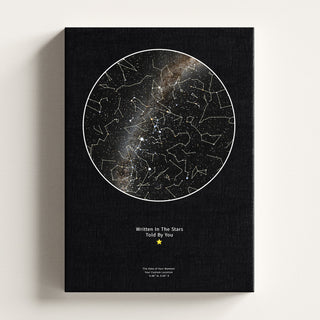
 Personalised Star Map | Custom Night Sky Print
From £21.99
View product →
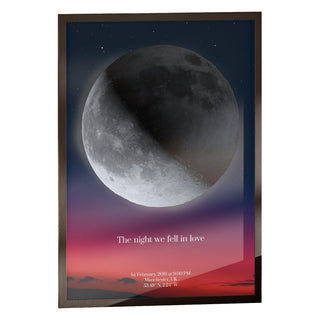
 Personalised Moon Map | by Skylit Studio
From £21.99
View product →
 Personalised Moon Phase Map for Family | by Skylit Studio
From £21.99
View product →
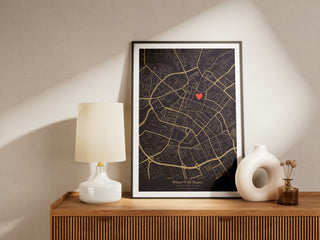
 Custom Location Map | Personalised Map Print by Skylit Studio
From £21.99
View product →
 Your Name From Orbit
From £21.99
View product →
 Print Your Universe - Custom Image Print
From £19.79
View product →
Keeping the Day
An eclipse trip, or even a family morning in the garden with a colander and a pair of glasses, is the kind of day people talk about for years. Skylit Studio makes personalised prints that can keep that date, and each one fits the event a little differently.

- A star map: a personalised star map calculated for 2 August 2027 and the place you stood shows the stars above you at that moment. Most are hidden by daylight, but inside the path of totality the brightest of them come briefly into view.
- A moon phase print: a moon phase print for eclipse day will show a new Moon, almost entirely dark, because that dark Moon is exactly what makes an eclipse possible. It does not depict the eclipse itself, and it is a quietly scientific way to mark the date. Our guide on choosing a date for a moon phase print covers how each phase reads on the wall.
- A location map: if you travel to Gibraltar, Tarifa or Luxor, a custom location map of the town where you watched totality is a natural keepsake from the trip.
All three start at £21.99 for an unframed A4 print, with framed and canvas finishes and sizes up to 60 x 80 cm. You can see how the designs are made on our how it works page.

Frequently Asked Questions
When is the total solar eclipse in 2027?
Monday 2 August 2027. From the UK the partial eclipse runs from roughly 09:00 to 11:00 BST, with maximum at about 10:00 BST. In southern Spain and Gibraltar, totality comes at around 10:45 local time (09:45 BST).
How much of the eclipse will the UK see in 2027?
A partial eclipse only. Coverage is greatest in the south: about 44 per cent of the Sun in Southampton and about 42 per cent in London and Cardiff, falling to about 35 per cent in Manchester and about 27 per cent in Edinburgh.
Where is the best place to see the 2027 total solar eclipse?
Egypt near Luxor has the longest totality, more than six minutes, and very reliable clear skies. For UK travellers, Gibraltar and the Tarifa coast are the nearest options, with about four and a half minutes of totality and generally good August weather.
Will the 2027 eclipse be visible in Spain?
Yes. The path of totality crosses the southern tip of Spain, including Tarifa, Cádiz and Málaga, as well as Gibraltar. The rest of Spain sees a deep partial eclipse.
Is it safe to look at a partial eclipse?
Only with proper protection. Use eclipse glasses that meet ISO 12312-2, or project the Sun through a pinhole. In the UK, protection is needed for the whole event, because the Sun is never fully covered.
Can I get a star map of the eclipse day?
Yes. Enter 2 August 2027, the time and the place in the Skylit Studio star map designer and it calculates the sky above that spot. Orders placed by 3pm on a working day are dispatched the same day, and free UK delivery by Royal Mail Tracked 48 then takes 2 to 4 working days.
Plan Ahead, Look Up
Put Monday 2 August 2027 in the calendar now. Whether you watch a crescent Sun from a British back garden or stand in the Moon's shadow on the Rock of Gibraltar, buy certified glasses early and keep an eye on the forecast. Clear skies.


